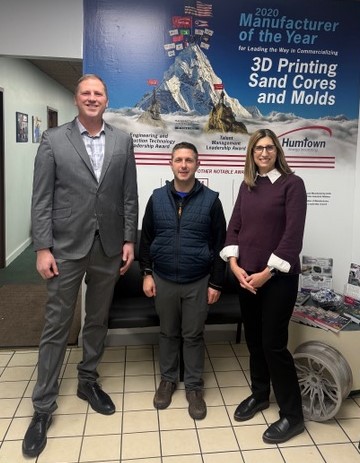
On January 30, 2026, I had the opportunity to visit two graduates of Bakke Graduate University in the city of Youngstown in the United States. Dr. Tim Figley (2017 MBA and 2022 DTL graduate) and Dr. Shelley Murray (2018 DTL graduate) invited me to their city to learn more about the remarkable transformation that is taking place there through collaborative renewal efforts involving leaders from local businesses, nonprofits, churches, government agencies, and universities. I was amazed at what I saw and experienced in Youngstown in just one day. It was just a snapshot of the momentum that is building in that region.
I first got to know Tim when he enrolled as a student in a Pittsburgh City Immersion course that I taught for BGU in October of 2018. Youngstown is only about a one-hour drive from Pittsburgh, and there are many similarities between the two cities. Both Pittsburgh and Youngstown experienced rapid urbanization growth during the rise of the steel industry in the 1800s and 1900s in the United States. Both cities experienced significant declines in population due to job losses and economic setbacks related to the decline of the steel industry beginning in the late 1970s through today. Pittsburgh, once one of the fastest growing cities in the U.S., experienced a decline in population of nearly 400,000 people from what was at its highest point a metropolitan area of over 2.5 million people. Youngstown had a smaller peak population than Pittsburgh, with around 260,000 people in the 1970s, but they faced a significantly greater percentage decline in population in recent decades, which has led to a population of around 60,000 people in the city today.
Pittsburgh has done some innovative things to stabilize the city, including shifting to an economy that is more known for medicine, education, and technology than for steel. Much of the renaissance in Pittsburgh emerged as the direct result of Christians getting together to pray for the city and launching collaborative initiatives between leaders across sectors. We still have work to do in my home city, but we have seen many signs of hope. During the BGU immersion in Pittsburgh in 2018, leaders from around the world were able to learn from some of our approaches to city transformation. Tim mentioned to me during my visit to Youngstown that he was changed forever by his time in Pittsburgh. He was already an effective leader and executive coach before he enrolled in that course. But that course gave him fresh vision for what could be in Youngstown. He was challenged to reach out to other leaders in Youngstown to see what they could do together to work toward the common good and flourishing of Youngstown.
As it turns out, Tim and Shelley had attended an event years ago in Youngstown where BGU’s current Chancellor, Dr. Brad Smith, had shared about how much impact leaders could make by studying at BGU. On that day, Tim and Shelley both decided to enroll as students at BGU even though they had not yet met each other. They eventually did meet as they both caught a vision to make a difference in Youngstown through their studies at BGU. Shelley caught some of the vision for what can happen through city transformation when she participated in a BGU course in Addis Ababa, Ethiopia, and in her other online courses. Together, Tim and Shelley have been galvanizing leaders in the Youngstown area to start working together, Tim as a business consultant and executive coach, and Shelley initially as a Christian school administrator and now as the Chief Executive Officer of the Youngstown Area Goodwill Industries.
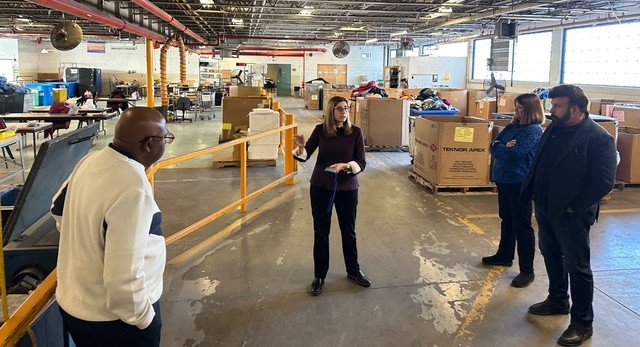
We started our time together at the one-day city immersion in Youngstown with a tour of Youngstown Area Goodwill Industries led by Shelley. Tim and Shelley invited a group of leaders from the region to join us for a day of learning and collaboration, to see first-hand the progress that has been made in recent years. Workforce development is a key component of the transformation that is taking place in Youngstown, and Shelley is helping to lead the way with new initiatives and strategies. The Goodwill presence that she oversees in five counties is so much more than simply retail stores and donation centers. As we walked and talked with Shelley, she explained a myriad of innovations that were creating jobs, increasing productivity, and training local residents for the careers of the future. We saw training programs uniquely designed for people on the margins of society aimed at empowerment and living wages, and we met leaders who were bringing people together from local foundations, government agencies, nonprofits, churches, and businesses to address to unique social challenges of different neighborhoods. Goodwill has turned into a galvanizing force for good in the region through intentional strategies to bring people together, and Shelley has been living out BGU’s transformational leadership perspectives through her influence with other leaders.
During lunch at a building in downtown Youngstown that local entrepreneur had purchased, we had a roundtable discussion with local leaders on the current state of the city and opportunities for networking and future collaboration. There was a buzz of excitement in the room as leaders lit up when they shared about their work and their hopes and dreams. I was able to share about some of the transformational leadership perspectives that we teach at BGU, and on the progress that we have seen in Pittsburgh through similar collective initiatives. Tim facilitated a meaningful discussion with the roundtable. I could tell that he was in his element as a consultant and coach, and I was inspired by how much he had grown to love the people in his community.
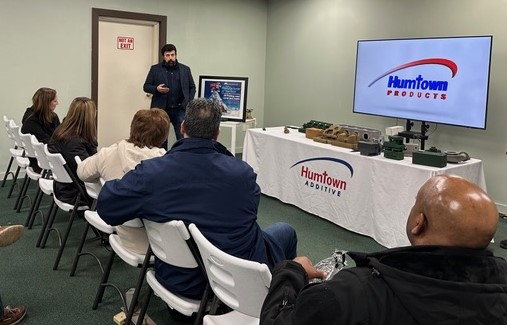
Tim led us over to a local business called Humtown where his friend who owns that family business, Mark Lamoncha, showed us around their manufacturing plant that had earned a recent Manufacture of the Year Award from the National Association of Manufacturers and many other national awards for innovation and culture. Tim has worked with Mark to help him to transform a once-struggling family business into a profitable company that also highly values the people who work there and the surrounding community. Tim wrote a book with Mark in 2023 called The Industrial Athlete Operating System: Where Human Performance Empowers Industry 4.0 where they highlight the process that they implemented to grow a business by emphasizing employee transformation, management transformation, workplace transformation, and culture transformation. I was in awe at what I saw, and the people we met, as we toured the business. I had the opportunity to spend a few minutes with Mark in a car ride to his facility, and he shared with me that he attributes most of the transformational work in his business and in his leadership to his relationship with God.
In fact, many of the leaders that I interacted with in Youngstown shared that their faith in the Lord was foundational to the resilience and positive changes that are underway in the region. Not only was I inspired by the strategies that were being implemented by leaders like Tim, Shelly, and Mark, I was also inspired by how these transformational leaders were living out their faith in practical ways for all to see and experience. They truly had come together for the flourishing of their city and the entire region. I was thankful to be able to share a coffee with Tim and Shelley before my drive back to Pittsburgh that evening. We dreamed up some new ways that we could stay connected given our geographical proximity, and we also shared ideas about how BGU could continue to support them in their work in the future. I could tell that this was all just the beginning of something good. God is on the move in Pittsburgh, God is on the move in Youngstown, God is on the move at BGU, and there is no better place to be than dreaming and building together around something good that God is doing in the world.
Dr. Bryan McCabe
BGU President