It is with great delight that I invite you to Africa once again. Bakke Graduate University continues its rich tradition of offering leaders the rare opportunity to immerse themselves in a city and to treat that city as a laboratory for transformative learning in the pursuit of human flourishing. From April 30 to May 7, 2027, we will gather in Cape Town, South Africa. This immersion builds on close to two decades of BGU presence in Africa, devoted to developing and equipping key city leaders for urban transformation and for the pursuit of peace and justice in the face of corruption and the underdevelopment that so often attends it.

Cape Town is located in the Western Cape province, at the southwestern tip of South Africa. It sits on the Cape Peninsula, where the city is bordered by Table Mountain and the Cape Fold mountain ranges, with the Atlantic Ocean to the west and False Bay (part of the Indian Ocean side) to the southeast. The City serves as the legislative capital of South Africa (while Pretoria is the administrative capital and Bloemfontein the judicial capital) and is the provincial capital of the Western Cape.
Cape Town is a unique city with a story written in layers. The city is the ancestral home of the indigenous Khoi peoples with San presence, became a colonial settlement characterized by the trade in enslaved people, and the deliberate spatial engineering of apartheid all remain legible in its streets, its suburbs, and its silences. For eight days, Cape Town will be both our case study and our classroom: a living laboratory for examining how cities carry historical trauma in their physical form, and how leaders committed to justice can work within, and against, that inheritance.
Together we will engage critically with pivotal moments in the city’s history, including the forced removals of District Six and the wider machinery of the Group Areas Act, alongside symbols of transformation such as Robben Island’s journey from prison to heritage site. Drawing on the language of truth-telling and restorative justice that shaped South Africa’s own transition, we will ask what it means for leaders to hold historical memory honestly, neither bypassing painful truths nor being paralyzed by them, while cultivating a hope that is credible rather than naive.
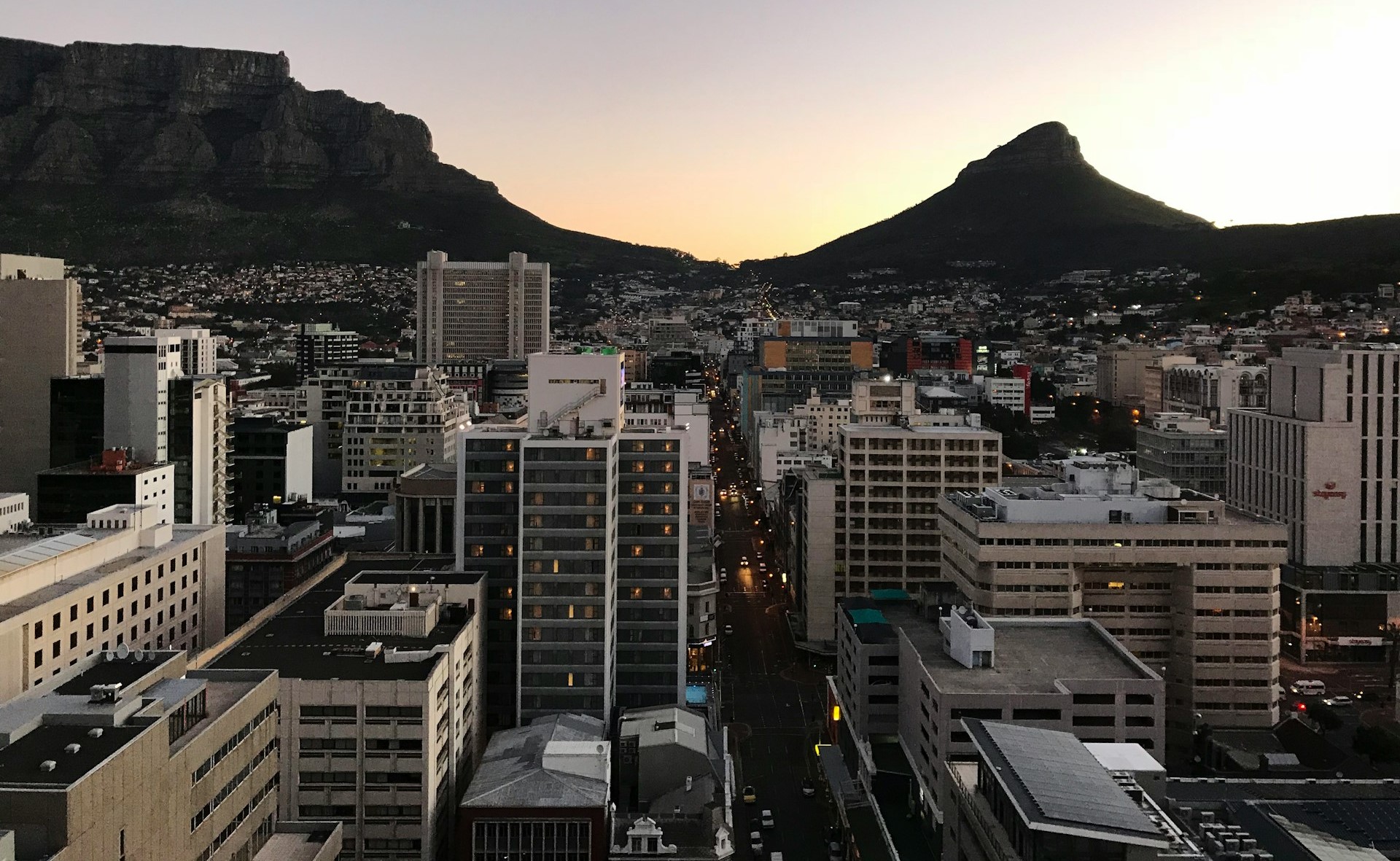
A central conviction of this course is that leadership in post-apartheid contexts cannot be understood as a purely personal or interpersonal exercise. Apartheid’s legacy in Cape Town is inscribed in land, geography, and access. It is visible in the persistence of informal settlements such as Khayelitsha and in urban planning patterns that continue to shape opportunity along racial lines. Participants will therefore be equipped to think spatially and structurally about leadership, examining how policy, planning, and power intersect, and what it takes to lead processes of genuine urban and social transformation.
The course is designed for graduate-level learners from diverse national, cultural, and disciplinary backgrounds, and it welcomes multiple entry points into the material: theological, historical, political, and practical. Through case studies, historical analysis, and direct encounters with Cape Town’s landscape and communities, participants will develop frameworks for leading with integrity in divided or post-conflict contexts, wherever in the world they may serve.
Participants will leave able to trace how apartheid shaped Cape Town and how its effects linger today, to hold memory and hope in productive tension, to treat urban inequality as a leadership challenge rather than merely a policy problem, and to apply these lessons in other divided or transitioning contexts.
If you have been looking for a learning experience that will stretch your mind, stir your faith, and sharpen your leadership, I warmly invite you to join us in Cape Town. Few cities in the world compress so much of humanity's struggle and hope into such a small geography as Cape Town. To walk its streets is to walk through layers of history that are not confined to museums or textbooks — they are visible in the mountain, the harbor, the townships, and the quiet gaps where communities used to stand.
A visit to the wonder of Table Mountain and the iconic Robben Island, where Nelson Mandela served his 27-year prison term, will leave you with unforgettable memories.
I encourage you to register early so that you can make your travel arrangements in good time. For enrolment details, please contact the BGU admissions office. You can call 214-449-1409 or email Admissions@bgu.edu for more information. I look forward to welcoming you to the Cape of Memory and Hope. You can find cost information HERE.
“Ek sien daarna uit om jou in Kaapstad te verwelkom." (I am looking forward to welcoming you to Cape Town!)
Professor of Record
Cape Town City Immersion